E n d l e s s D r e a m
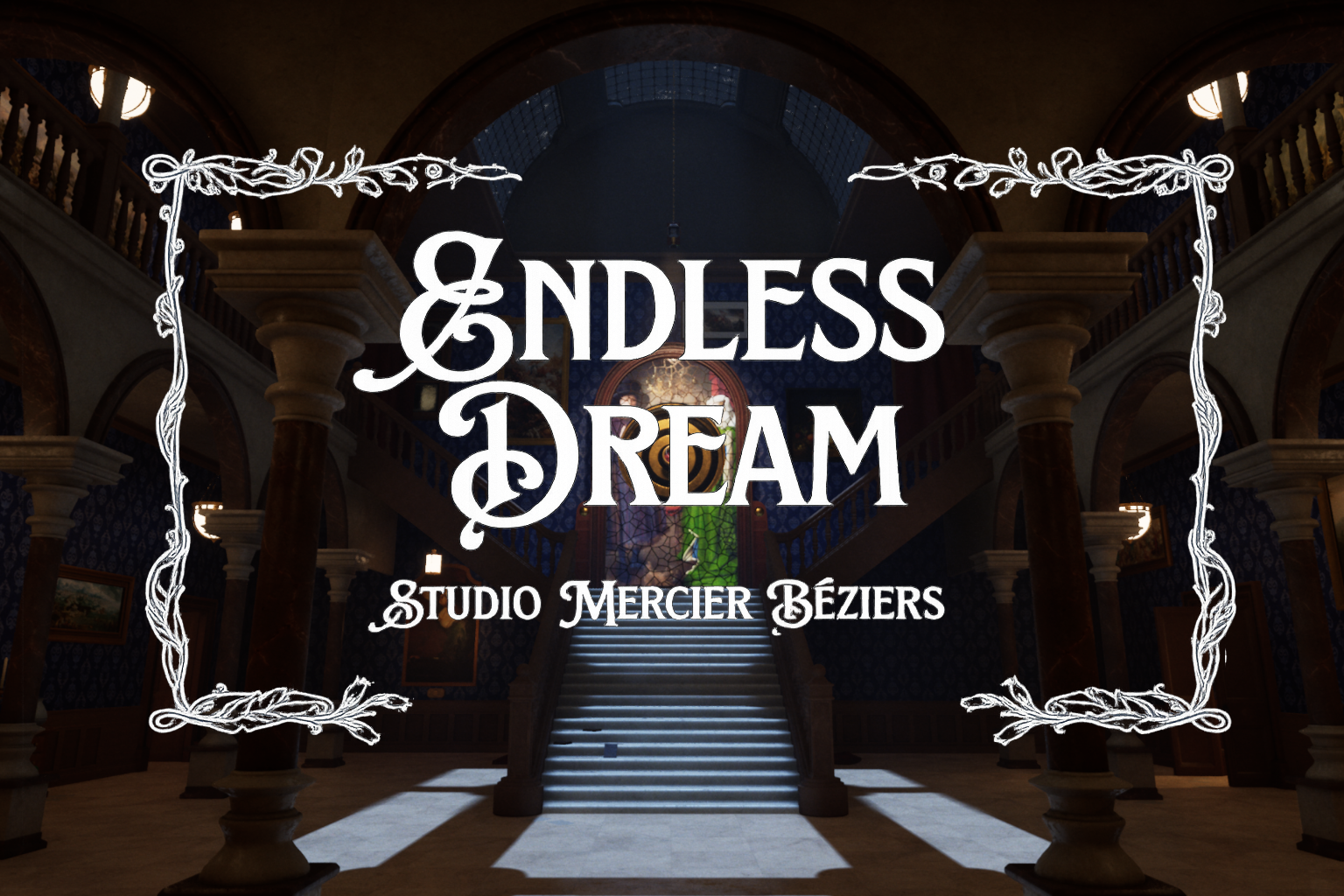
Global description
Immersive 3D puzzle game – Student project
I have been participating in a student project of an immersive 3D puzzle game, developed for the PC under Unreal Engine, with a team of 8 people for 1 and a half years.
Objective:
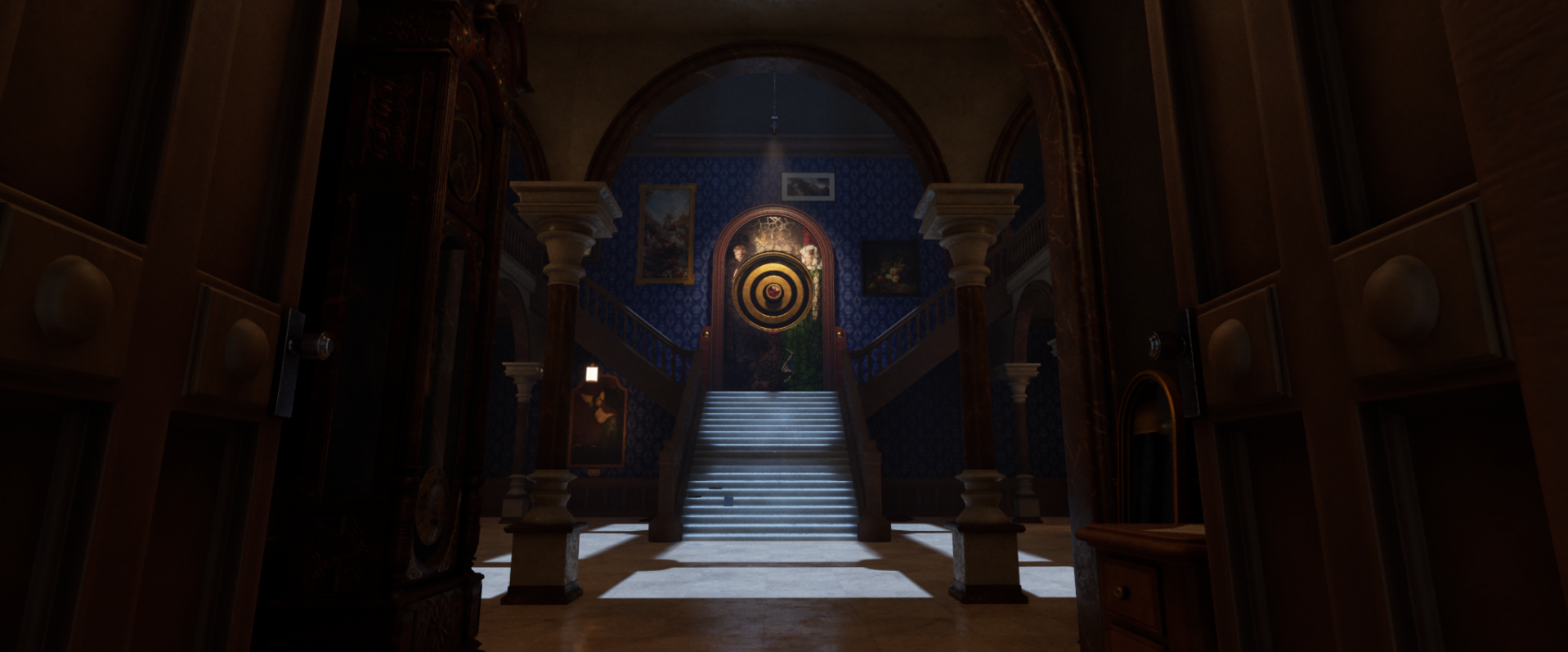
Create a captivating experience in an immersive mansion, where the player must solve puzzles combining exploration and reflection.
My role:
Developer and creator of the game’s cinematic sequences.
Tools and technologies:
Unreal Engine
Rider
C++ / Blueprints
Contributions and learning:
Collaboration on a long-term team project
Optimization and iterations on gameplay and puzzles
Creation and integration of immersive cinematic sequences.
Background:
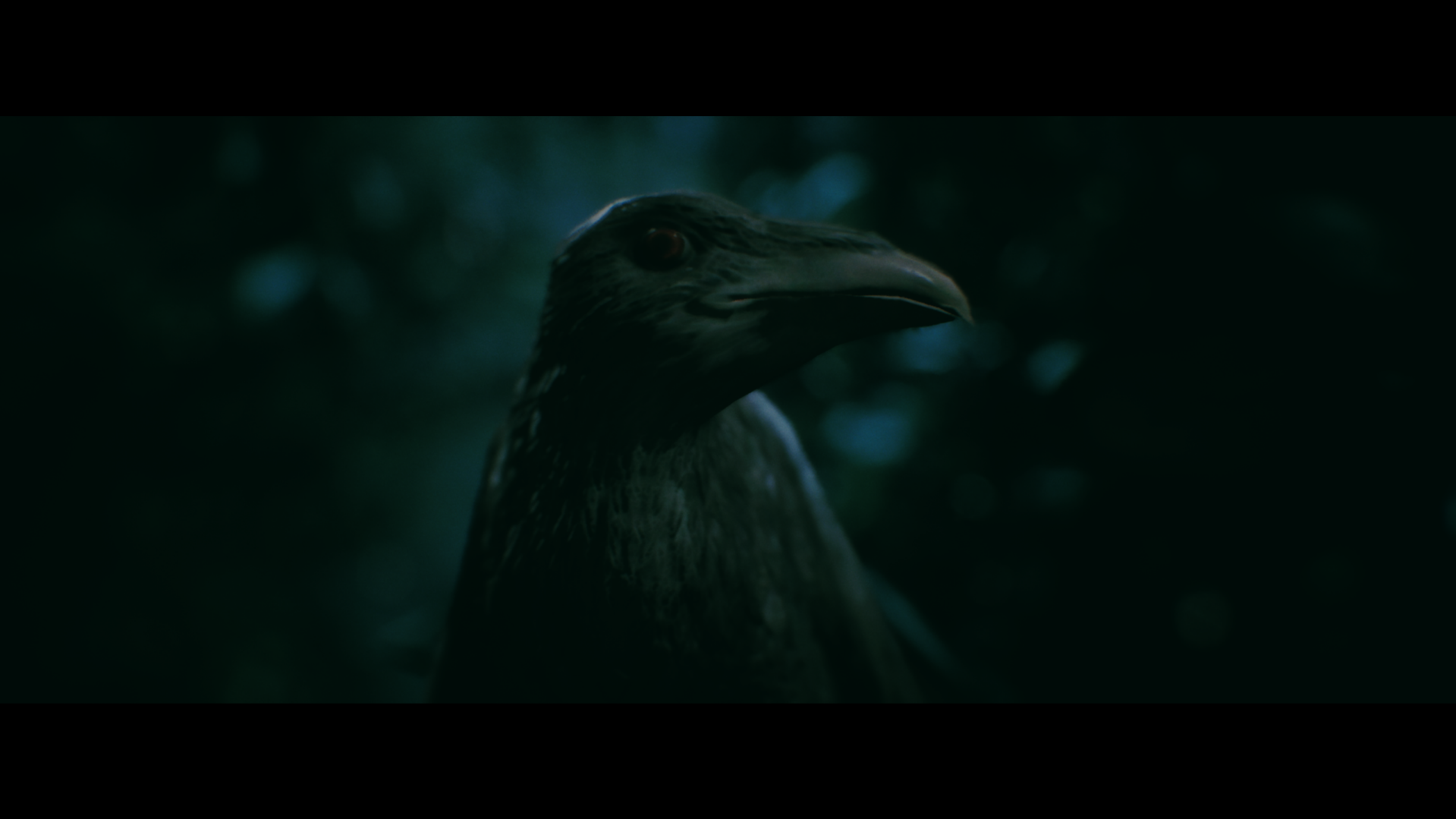
The Player embodies an inspector who is contacted by the butler of the house Saint-Clair, he returns from leave granted by his master but it seems that no one is present in the house anymore which worries him enormously because the Saint-Clair are not the type to leave their home very often. Especially since the Father was working hard on something he did not want to divulge.
Your goal will be to find a way out of this mysterious time loop and solve your initial investigation.
My participation on the project
Core Gameplay:
The player explores an immersive 3D mansion and solves various puzzles to progress. The gameplay combines:
Exploration of the rooms and the environment in search of clues.
- Solve logical and interactive puzzles that require observation and reflection.
- Immersive interactions with objects and decor elements to reveal secrets.
- Narrative progression through integrated cinematics, game mechanics, and scripted events.
The objective is to create an experience where reflection, exploration and immersion combine to engage the player in the mansion.
My Work on the Project
Mechanics of the investigator’s book
In the game, the inspector’s book is a central game mechanic present from the beginning of the adventure. It guides the player and enriches the narrative experience, while being linked to other important game mechanics.
The book is divided into three categories:
- Story : gathers all the documents and clues that the player discovers during their exploration.
- Investigation : contains the inspector’s writings and thoughts, giving clues and immersion in his analysis of the situation.
- Pictures : displays visual elements related to other game mechanics.
This mechanism allows:
- A narrative immersion from the start of the game.
- A tool to help with reflection and solve puzzles.
- An interaction between different gameplay elements to enhance the overall experience.

Work carried out
- Creation of the book C++ / Blueprint
- Creation and programming of the book interface in Unreal Engine.
- Integration of documents, thoughts and images for each category.
- Optimizing access and interactions for a seamless experience.
Use
After the player has pressed the" gamepad special left" on the controller, the book opens, displaying a 2D ("Investigation") and 3D interface on the book’s mesh.
- 2D Interface: the player can navigate between the investigator’s notes, updated according to their progress in the story.
- 3D Interface: the scripts selected by the player appear directly on the book’s mesh, offering an immersive and visual experience.
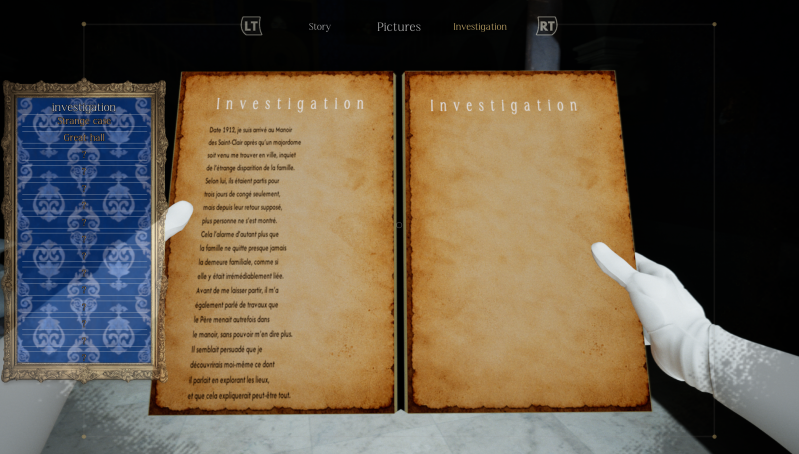

Once the player uses the book navigation keys, he can browse through the different categories.
On the left, the "Story" category: as for the "Investigation" category, the player can consult the documents he has recovered during his adventure. Undiscovered documents are represented by a question mark.
As for the "Investigation" category, once a document is selected, its content is displayed directly on the book’s interface in the game, which improves immersion and readability of information.
Finally, on the right is the category "Pictures".
This category works in a similar way to the other two, but it includes photos taken by the player, related to a game mechanic dedicated to taking photos.
It thus allows storing an unlimited number of photos and offers the possibility for the player to teleport to the corresponding location thanks to an associated key.

Conclusion
The inspector’s book is a central mechanic of the game, combining 2D interface and immersive 3D integration to enrich the player’s experience. Through its three categories — Story, Investigation and Pictures—it allows to centralize information, follow the narrative progress and strengthen the links between exploration, puzzles and narration.
This mechanism offers both a tool for understanding for the player and a strong immersive element, by directly integrating the information within the game’s universe. It thus contributes to improving the readability of the gameplay while strengthening the player’s engagement in their investigation.
Puzzles
In number of 3, the puzzles are central mechanics of the game, representing the heart of reflection and gameplay.
They punctuate the player’s experience by offering varied challenges and allow their progression within the mansion, unlocking new areas and advancing storytelling.
Eagle
This puzzle involves the player interacting with a strange-shaped object. Once activated, it can, using the associated inputs, rotate this object on all its axes.
Thanks to a ray of light, the shadow of the room is projected onto a painting. The objective is then to reproduce the shape of an eagle visible on this painting by correctly handling the object.
Once the enigma solved, a cinematic is triggered, revealing the workings and the mysterious mechanisms that make up the manor.

Chessboard
This puzzle is based on a combination of exploration and logic centered around a chessboard.
Throughout the manor, the player must find two scattered chess pieces: a rook and a knight. A chessboard is already set up with an ongoing game, and the objective is to retrieve these pieces in order to achieve a checkmate.
Once the pieces are collected, the player can interact with the chessboard. The player must then:
- First place the knight, moving it square by square to a specific position indicated in a document found in the manor (and stored in the book).
- Then position the rook correctly to complete the sequence.
Once both pieces are placed in the correct positions, a mechanism is triggered, opening a hidden compartment within the chessboard and rewarding the player with an essential item for the rest of the game.

Painting
This puzzle revolves around a large painting and plays a key role in the game, as it blocks the player’s path.
To solve it, the player must first complete the previous puzzles in order to collect three coins, one of which is hidden somewhere in the mansion. Once the player interacts with the painting, the three pieces appear reversed.
The objective is to reconstruct the painting by rotating these pieces. However, the challenge lies in their interdependent behavior:
- The small piece also rotates the large one.
- The middle piece rotates the large one.
- The big room makes the small spin.
The player must therefore carefully consider the order and combination of rotations to properly restore the paint.
Once completed, the tableau spins, revealing a hidden passage and allowing the player to progress further in the mansion.

Cinematics
Discover here the cutscenes that I was able to create in its entirety for the game
Introductory Cinematic
This cinematic, created in 2 days, introduces the beginning of the game by presenting the inspector arriving at the manor.
The work first focused on designing the environment and lighting to create a dark and mysterious atmosphere, aligned with the game’s tone.
I then produced the different sequences and shots composing the cinematic, working on framing and pacing to achieve an immersive and coherent result.
Once the visual result was satisfying, UI elements were added to present the team members.
Finally, sound design was implemented to enhance immersion and reinforce the overall atmosphere of the scene.